🏘️ Vivi e lavora da remoto nei borghi autentici d'Italia 🌈

❤️ Se non ti senti a casa in 48 ore, ti rimborsiamo e ti aiutiamo a trasferirti. ✅
Medieval Roots: The Birth Of Vallo di Nera in Umbria
Step through the stone archways of time and discover how villages like Vallo di Nera came to life—where purpose met beauty, and every cobbled lane held meaning. In this article, we’ll take you back to the origins of Italy’s medieval hilltop communities, exploring how faith, function, and local craftsmanship shaped the poetic architecture we now call home. From fortified walls to whispering alleyways, join us in uncovering the story behind the village that now hosts Dolce Vita Coliving—and why its magic still endures today.
Media credits:
Dolce Vita Coliving
Indice
1. The Rise of Medieval Villages in Italy: Function and Faith
2. Meet Vallo di Nera: A Hilltop Jewel in Umbria
3. Who Built It and Why
4. Architectural Secrets & Details
5. A Walking Tour Through Time – Travel Diary
6. Taste the Village
7. Why Experience It Slowly

Discover How Medieval Masterpieces Like Vallo Di Nera Were Built
A Step Back in Time: How Medieval Italian Villages Were Built – and the Origins of Vallo di Nera
Step into a living history book nestled in the green heart of Italy—Vallo di Nera, where ancient walls tell stories, alleys whisper secrets, and every stone breathes life into the past. Welcome to our home at Dolce Vita Coliving, a one-of-a-kind coliving experience in a real medieval village.
The Rise of Medieval Villages in Italy: Function and Faith
During the 12th and 13th centuries, Italy was a patchwork of city-states, feuding nobles, and migrating rural populations. Amid uncertainty, entire communities began to cluster on hilltops, often around a castle or monastery. These settlements weren’t random; they were meticulously planned with both practical and symbolic intentions.
Strategic location played a vital role: elevated ground not only provided breathtaking views but served as natural defense against invaders. Add to this defensive walls, narrow passageways to slow attackers, and a ritually important central square, often with a church, and you have the classic blueprint of a medieval Italian village.
In this protected cocoon, daily life blossomed: trade routes passed through, families settled, traditions formed, and shared labor built the stone bones of a new society.
Meet Vallo di Nera: A Hilltop Jewel in Umbria
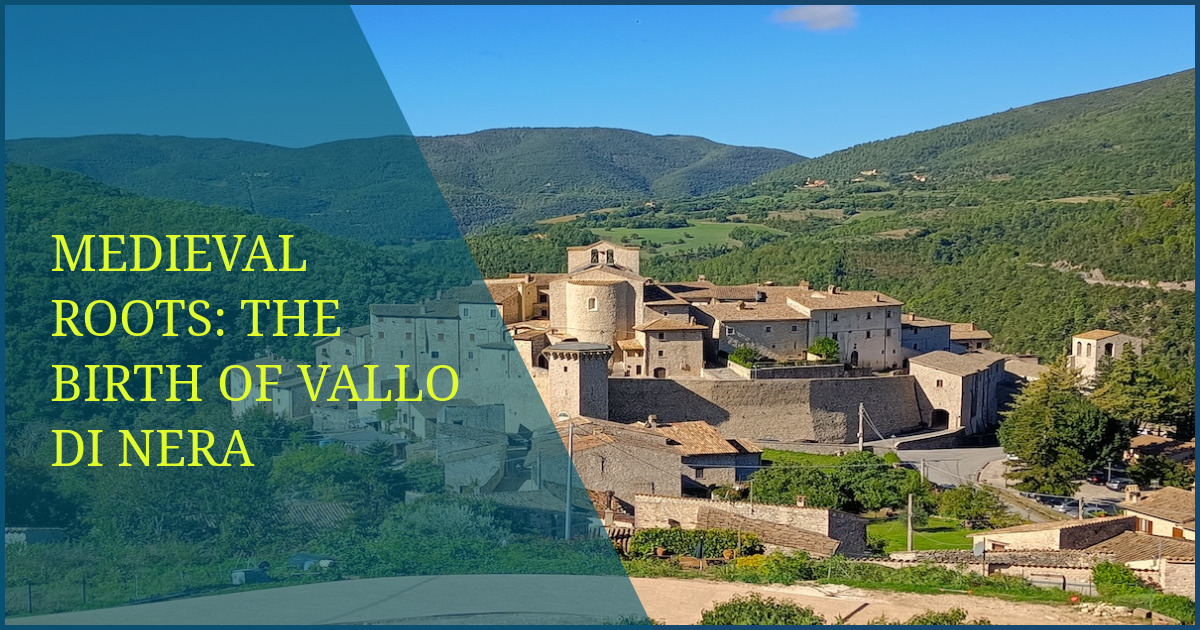
Perched gracefully above the Nera River, just 60 km southeast of Perugia, Vallo di Nera is one of “I Borghi più belli d’Italia"—Italy’s most beautiful villages. Founded between the 12th and 13th centuries, it rose where nature, spirituality, and strategy agreed. Here, history wasn't written in books but carved in stone, frescoed on church walls, and whispered in candlelit gatherings.
This is not just a preserved village—Vallo di Nera is a medieval time capsule. Its original elliptical shape, designed for defense and flow, remains almost entirely intact, enclosed by robust defensive walls and punctuated by one remaining gateway. At night, those same walls glow under the moon, as if lit by the past itself.
Who Built It and Why
Vallo di Nera's foundation was both strategic and spiritual. Located near the crossroads of important paths into Valnerina and the mountains beyond, it was easy to defend yet deeply connected to the broader world.
Monks and religious brotherhoods played a central role in developing the village. Alongside nearby castles, monasteries created sanctuaries of learning, worship, and economic support. This spiritual network fostered not only deeply rooted faith, but a resilient, cooperative local community.
From above, you can still trace the village’s intentional layout: stone houses leaning gently downslope, interconnected by winding alleys narrower than a cart, designed to confuse attackers—while offering refuge to cats, gossip, and the scent of fresh herbs.
Architectural Secrets & Details
Everything here was built by hand, mostly from locally sourced limestone and sandstone. Homes are charmingly irregular, built one against another like embraces against the hillside. Many feature beautiful stone portals, tiny internal loggias, and in rare cases, frescoes that once honored saints or protected families from harm.
Each alleyway twists organically, adjusting to the terrain, each curve shielding the heart of the village from watchful eyes. It’s a design born not only of security, but communal intimacy.
In the softly humming silence, it’s easy to imagine merchants calling out wares in the piazza, children chasing each other through tunnels of stone, or mothers baking bread in shared ovens.
A Walking Tour Through Time – Travel Diary
Route: Circular walk through Vallo di Nera’s main pathways
Duration: 1 – 2 hours depending on pace and curiosity
Difficulty: Easy to medium (stone steps and uneven surfaces)
Bring: Water bottle, walking shoes, a camera or sketchbook, maybe a notebook—you’ll want to remember this.
Stops to Explore:
1. Portella – the main gateway and entrance to the medieval village
2. Church of Santa Maria Assunta – home to 14th-century frescoes
3. Piazza San Giovanni – the central square filled with stories and sunlight
4. Ancient Footpath – trails lead down toward the Nera River or up into the oak-covered hills
Stop at a bench. Listen to the swallows. Let the silence tell you something your calendar never will.
Taste the Village
While visiting, treat yourself to local flavors like:
- Strangozzi pasta topped with black truffle from nearby forests
- Lentils from Castelluccio – nutty, earthy, and traditional
- Pecorino stagionato – a sharp, aged sheep’s cheese best enjoyed with local honey
- Cinghiale stew (wild boar) with Umbrian red wine for a full immersion into rustic cuisine
Why Experience It Slowly
Today, in a world of rushing and remote everything, Vallo di Nera offers a rich and rare alternative: slowness, silence, story, soul. This is authentic Italy —raw, real, and humming with tradition. Whether you’re a remote worker, an explorer of histories, or simply someone in search of connection, this village invites you to slow down and live deeply, not just digitally.
At Dolce Vita Coliving, right here in Vallo di Nera, we’ve made a home for those who seek more than just WiFi and workspace. We offer community, creativity, and the chance to live—not just visit—this magic, one stone sunrise at a time.
Book your stay at Dolce Vita Coliving now and begin your personal journey into medieval beauty, soulful connection, and peace you can carry home.
👉 Reserve your stay https://www.dolcevitacoliving.com/book and become part of the living story.
🏡 Vivi anche tu il borgo: scopri le camere disponibili nel nostro coliving


How Medieval Villages Like Vallo Di Nera Came To Life
Step into a timeless world where medieval stone walls meet modern remote work—Dolce Vita Coliving is your chance to live, create, and connect in the enchanting village of Vallo di Nera. 🏰🌿 Ready to slow down and embrace la dolce vita? Book your stay now: dolcevitacoliving.com/book
Explore These Curated Resources
- I Borghi più belli d’Italia (https://borghipiubelliditalia.it/borgo/vallo-di-nera/) – Official page for Vallo di Nera on Italy’s most beautiful villages network.
- Umbria Tourism (https://www.umbriatourism.it/en/-/vallo-di-nera) – Official regional tourism page with info on Vallo di Nera and nearby attractions.


